




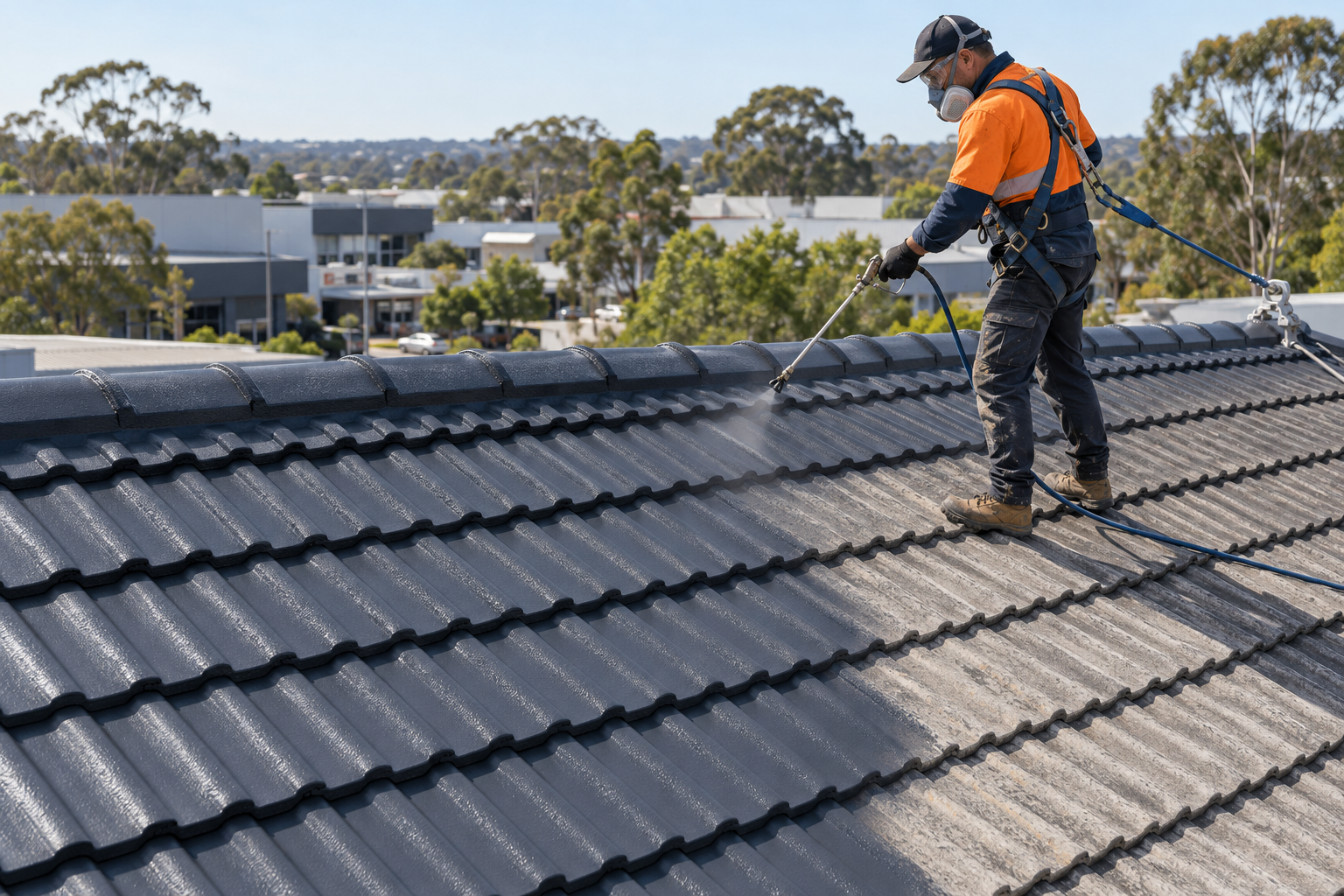
For owners of small commercial buildings, specifying roof paint is a maintenance investment that needs to account for substrate condition, contractor access and ongoing business operations. A faded surface may prompt the project, but appearance alone cannot establish the work required. Before approving expenditure, owners need a clear distinction between coating, repairs and replacement.
Businesses considering roof tile paint face additional questions about the existing material and its suitability for the proposed system. Concrete and terracotta tiles should not be treated as interchangeable surfaces. Contractors need to identify the substrate, assess previous treatments and confirm product compatibility before presenting a final scope and price.
For offices, childcare premises and neighbourhood retail buildings, these decisions affect more than the maintenance budget. Noise, site access and weather delays can influence tenant operations, making roof refurbishment a coordinated property project rather than a simple colour change.
Condition assessment sets the commercial scope
The first purchasing decision is whether the roof is suitable for refurbishment. An inspection should identify damaged sections, existing leaks, loose components and areas requiring attention before coating begins.
Owners should ask contractors to separate these findings from cosmetic recommendations. A proposal that groups every task under “restoration” can make it difficult to understand which work is necessary and which is optional.
Photographs and an itemised assessment help property managers compare proposals. They also provide a record of the condition that informed the agreed scope.
Where deterioration is extensive, the owner may need to compare repair and coating costs with replacement options. That comparison should consider the expected outcome of each approach rather than the upfront price alone.
Compatibility matters more than a generic description
A product described as suitable for roofs is not automatically appropriate for every roof material. The selected system needs to match the surface and any existing finish.
Contractors should identify the proposed preparation method, primer where required and finishing coats. Naming the complete system gives owners more useful information than a broad promise of a protective finish.
Previous coatings can complicate this assessment, particularly where their identity or condition is uncertain. The quotation should explain whether investigation, adhesion checks or removal is included.
Product substitutions also deserve a clear process. If the specified material becomes unavailable, the owner should receive an explanation of the alternative and any implications for the project.
Colour choices need realistic expectations
Colour can influence how a roof contributes to the building’s overall presentation. The choice should account for exterior walls, signage, neighbouring properties and any relevant site requirements.
The technical phrase solar reflectance provides a useful reference when discussing how surfaces reflect sunlight. However, a colour sample alone does not establish a product’s performance or justify a specific energy-saving claim.
Owners considering a specialised reflective system should request information for the actual product proposed. Claims should relate to its documented properties and the conditions under which it will be used.
A sample can still support visual approval. Reviewing it outdoors helps stakeholders assess the appearance more effectively than relying solely on a screen or printed brochure.
Access arrangements can change the quotation
Roof work requires contractors to plan how people, equipment and materials will reach the work area. Building height, surrounding space and entry points can affect that plan.
At occupied premises, access equipment may also restrict parking or pedestrian movement. Owners need to understand these impacts before accepting the contractor’s programme.
The quotation should identify access provisions and explain which arrangements depend on site availability. This reduces uncertainty about whether additional costs may emerge after work begins.
Tenant coordination is particularly important where businesses receive scheduled deliveries or serve customers throughout the day. A shared access plan helps maintain essential activity while the project proceeds.
Weather allowances belong in the programme
Application schedules need to follow the selected product’s requirements and actual site conditions. A booking date does not guarantee that preparation and coating can proceed continuously.
Property managers should ask how weather interruptions will affect the programme and who will communicate revised arrangements. This is especially relevant where access equipment remains onsite during delays.
Cleaning and preparation may also create temporary disruption around the building. Contractors should explain how surrounding areas will be managed and which activities require tenant notification.
A realistic schedule distinguishes active work from waiting periods. That clarity helps businesses plan around the project without relying on an optimistic completion promise.
Handover should support future maintenance
The final inspection needs to address the agreed repairs and application scope, alongside the finished appearance. Owners should receive product details, colour information and any applicable care instructions.
Warranty documents should identify who provides the warranty and what it covers. Workmanship and product warranties may have different terms, so a single advertised duration is not enough information.
For commercial owners, the value of refurbishment rests on a defined scope, suitable materials and manageable disruption. Keeping accurate records makes later inspections, repairs and purchasing decisions easier to plan and assess.